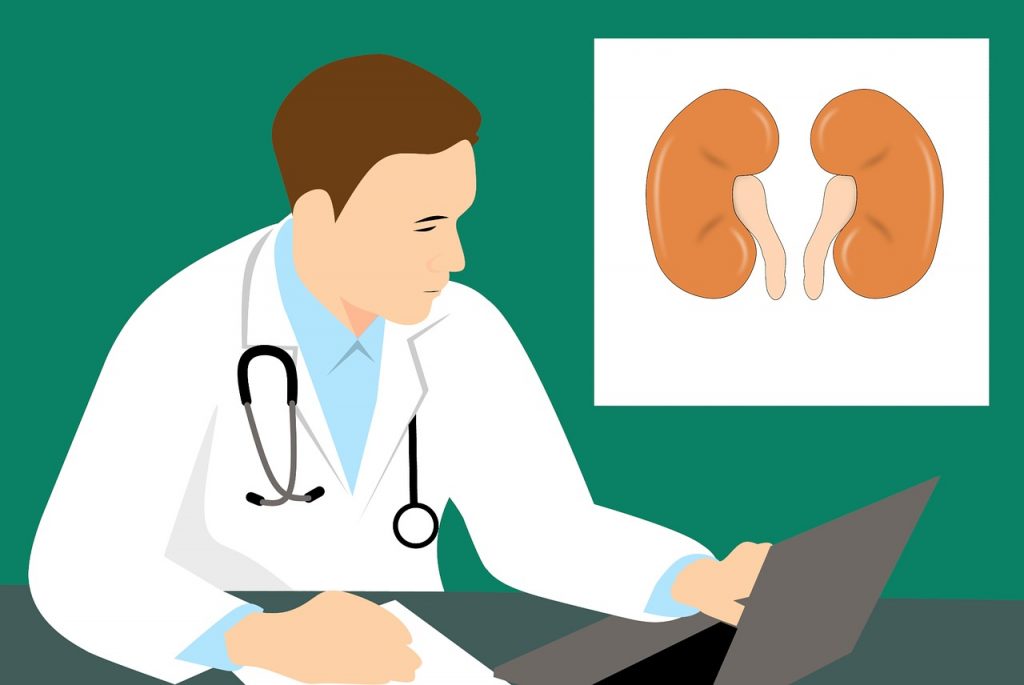


Kidney doctors: what does a nephrologist do?
What is a nephrologist?
A nephrologist is a doctor who specialises in the management of conditions that affect the kidneys.
What do nephrologists treat?
- Kidney failure of any cause
- Kidney transplants
- Dialysis
Nephrologists manage the many conditions that cause renal impairment and renal (kidney) failure. Their goal is to optimise renal function.
If a patient’s kidneys fail completely they will need dialysis – essentially artificial kidneys.
Patients survive many years on dialysis, either chronic ambulatory peritoneal dialysis or haemodialysis.
Nephrologists care for these patients and any complications of their disease. They also manage patients who have had kidney transplants.
Treatments
The treatment offered by nephrologists varies depending on the cause of the kidney problem and its severity. They may:
- Give medications alone
- Initiate and maintain dialysis – artificial kidney function, either CAPD or haemodialysis
- Arrange renal transplant and then manage that in the long term
Book your health appointments online
Find and instantly book your next health appointment with Healthengine
What to expect at your first appointment
History
Your nephrologist will begin by asking about your:
- Symptoms and their duration
- Severity
- Events leading up to your current illness
- Past medical problems
- Medications
- Family history
- Allergies
- Social history
Examination
Your neprologist will begin with a general examination, checking your pulse and blood pressure, looking at your hands, arms, eyes and neck.
Then they are likely to examine your heart and lungs and finally your abdomen to try to determine the cause, severity and complications of your kidney problems.
Specialty areas of interest
- Paediatric nephrology
- Renal transplant
- Dialysis
Associated tests
- Blood tests
- Urea and electrolytes
- Creatinine clearance
- Renal biopsy
- Renal ultrasound
- Urinalysis
- Urine microscopy
- Urine MC & S
- 24 hour urine collection
Training and qualifications
Links
A: Use HealthEngine to find and book your next Nephrologist appointment. Click on the following locations to find a Nephrologist clinic in your state or territory.
This article is for informational purposes only and should not be taken as medical advice. If in doubt, HealthEngine recommends consulting with a registered health practitioner.
All content and media on the HealthEngine Blog is created and published online for informational purposes only. It is not intended to be a substitute for professional medical advice and should not be relied on as health or personal advice. Always seek the guidance of your doctor or other qualified health professional with any questions you may have regarding your health or a medical condition. Never disregard the advice of a medical professional, or delay in seeking it because of something you have read on this Website. If you think you may have a medical emergency, call your doctor, go to the nearest hospital emergency department, or call the emergency services immediately.
Related Articles



Need a health appointment?
Find and book a doctor, dentist, physio and more on Healthengine
Find a practitioner