

CT Pulmonary Angiogram
Last updated: 28 November 2017
What is a CT pulmonary angiogram?
CT pulmonary angiogram (or CTPA) is a special test used primarily to look for the presence of pulmonary embolism (blood clots in the lung).
How is a CTPA performed?
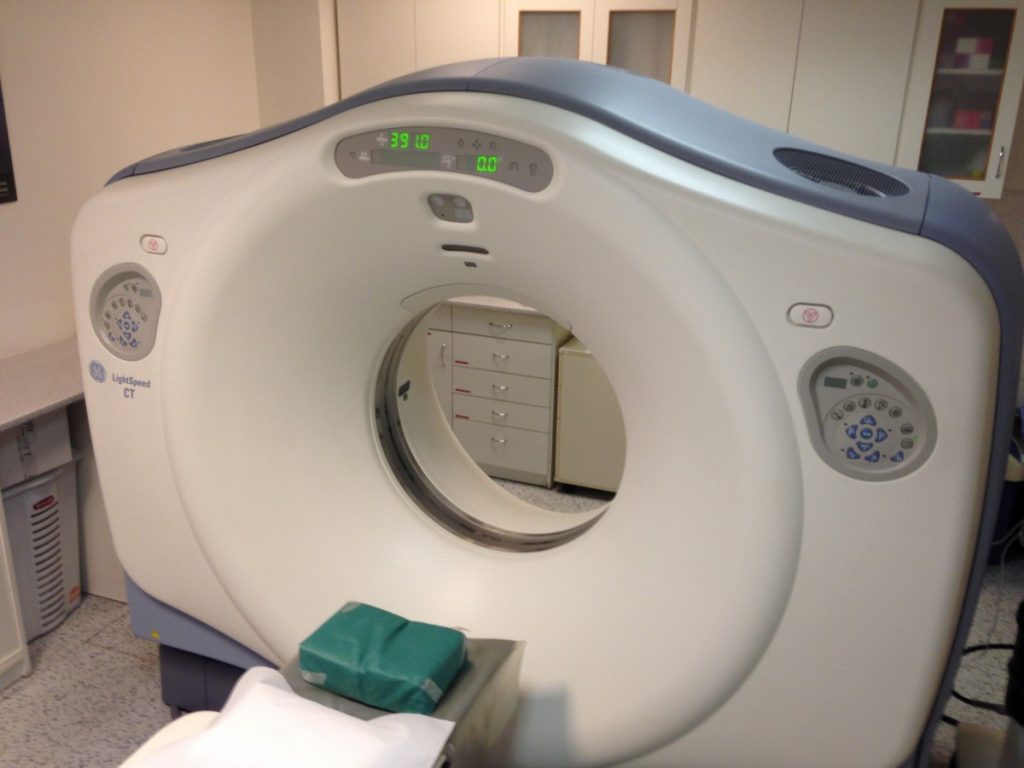
A CTPA is performed in the radiology department scanning room, with the patient lying flat (supine) on a CT table. The head is placed in a comfortable ‘docking pillow’ and the CT scanner gantry (donut) passess over and around the patient to perform the scan. The gantry travels over the patient from the neck to the abdomen to create the scan.
Timing is essential and the radiographer will use instructions to indicate when to breathe in, breath out or hold breath.
Intravenous contrast is used to highlight the pulmonary vessels, and to determine the presence of a clot in the lung. If the patient lies very still, and the chest is stationary (breath hold) this optimises the quality of the scan.
Get on top of your general health
Find and instantly book affordable GPs within Australia
When would you need a CTPA scan?
A CTPA scan is a useful investigation for those patients with a moderate to high probablity of pulmonary embolism. It is not the gold standard investigation, but is becoming more widely accepted as the standard non-invasive investigation of choice for determining the presence or absence of emboli (clots) in the pulmonary (lung) vessels.
Test results, explained
A CTPA is interpreted by an experienced radiologist. They are able to determine the presence of small, medium or large blood clots in the lung blood vessels, and determine the degree of potential compromise to the pulmonary (lung) system.
Related specialists
- Respiratory physician
- Cardiothoracic surgeon
- Radiologist
- Emergency physician
- General Practitioner (GP)
Related tests
- VQ scan
- Duplex scans of the legs
Also known as
- CTPA
Links
A: Use HealthEngine to find and book your next GP appointment. Click on the following locations to find a GP clinic in your state or territory.
This article is for informational purposes only and should not be taken as medical advice. If in doubt, HealthEngine recommends consulting with a registered health practitioner.
All content and media on the HealthEngine Blog is created and published online for informational purposes only. It is not intended to be a substitute for professional medical advice and should not be relied on as health or personal advice. Always seek the guidance of your doctor or other qualified health professional with any questions you may have regarding your health or a medical condition. Never disregard the advice of a medical professional, or delay in seeking it because of something you have read on this Website. If you think you may have a medical emergency, call your doctor, go to the nearest hospital emergency department, or call the emergency services immediately.
Related Articles


Need a health appointment?
Find and book a doctor, dentist, physio and more on Healthengine
Find a practitioner